
Running a business in the UK comes with its fair share of challenges — but your bookkeeping shouldn’t be one of them. Whether you’re a sole trader, limited company director, or managing a growing SME, staying on top of your finances is essential for compliance, clarity, and confidence.
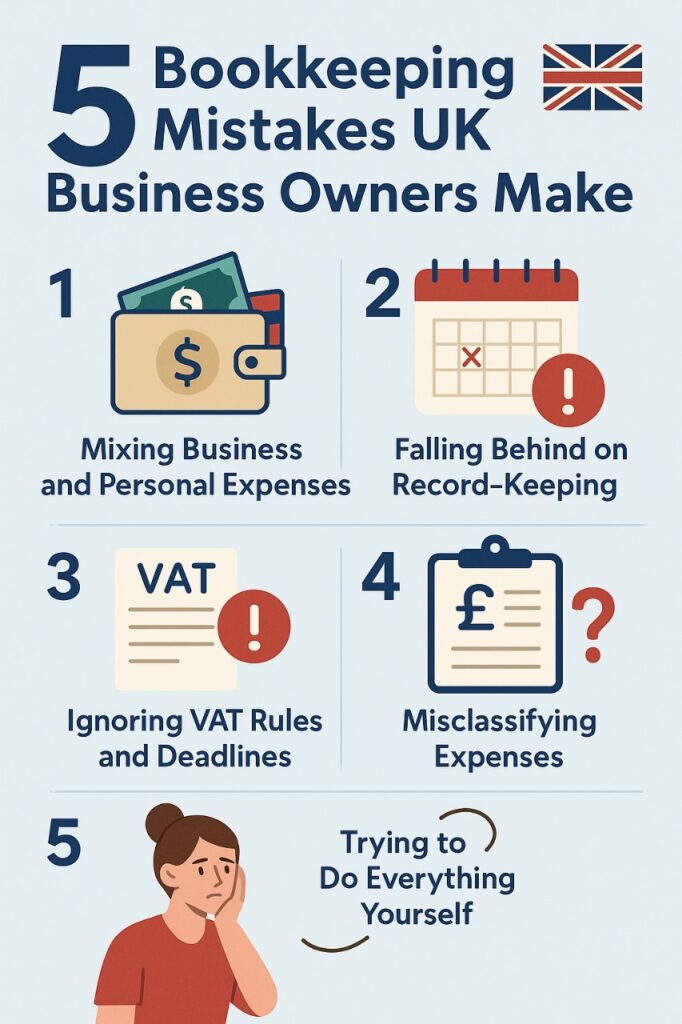
Unfortunately, many UK business owners fall into the same avoidable traps when managing their books. Here are the five most common bookkeeping mistakes — and how to avoid them.
1. Mixing Business and Personal Expenses
Why it’s a problem:
Combining business and personal expenses in one account makes it difficult to track business spending accurately. This can lead to messy records, inaccurate tax returns, and potential HMRC scrutiny.
Solution:
Open a dedicated business bank account. Always use it for income and expenses related to your company. Tools like QuickBooks or Xero can link directly to your account, helping automate transaction tracking.
2. Falling Behind on Record-Keeping
Why it’s a problem:
Many business owners wait until year-end or VAT deadlines to sort their records, which can lead to missed receipts, forgotten transactions, and filing errors.
Solution:
Set aside time weekly or bi-weekly to update your books. Better yet, use cloud accounting software with bank feeds to automate your entries. You can also outsource bookkeeping to stay ahead without lifting a finger.
3. Ignoring VAT Rules and Deadlines
Why it’s a problem:
If you’re VAT-registered, errors in recording VAT or submitting returns late can lead to penalties from HMRC. Mistakes in VAT rates or reclaiming VAT on ineligible expenses are common.
Solution:
Know your VAT scheme (Standard, Flat Rate, Cash Accounting, etc.) and keep VAT receipts organised. Consider using Making Tax Digital (MTD)-compliant software to submit your VAT returns on time and accurately.
4. Misclassifying Expenses
Why it’s a problem:
Incorrectly categorising expenses can distort your financial reports and potentially affect how much tax you owe. For example, capital expenses (like a computer) treated as normal office supplies could cause issues.
Solution:
Learn the basics of UK expense categories or let your accountant set up your chart of accounts. Use consistent labels and double-check expense classifications before submitting tax returns.
5. Trying to Do Everything Yourself
Why it’s a problem:
Many business owners try to manage their books in spreadsheets or apps without proper guidance. This can lead to errors, stress, and missed deductions.
Solution:
Work with a certified bookkeeper or accountant who understands UK tax rules. They can help ensure your records are accurate, compliant, and optimised for tax efficiency — saving you money in the long run.
✅ Final Thoughts
Bookkeeping doesn’t have to be a headache. By avoiding these five common mistakes, you’ll gain better control of your business finances and avoid costly errors. Whether you’re preparing for Self Assessment, VAT returns, or company accounts, keeping clean books is one of the smartest investments you can make.
Need help with your books?
We offer cloud bookkeeping and VAT support tailored for UK business owners. Contact us today to book a free consultation!